Typhoon Fighter EF-2000
Is a European multi-national joint development of twin supersonic multi-role fighter. It was developed by the UK, Germany, Italy and Spain and built by a consortium of Airbus, BAE Systems and Leonardo.

Typhoon Fighter EF-2000
Typhoon fighter EF-2000 is a multi-purpose fighter jointly developed by many European countries, mainly used for air superiority and ground attack missions. Typhoon fighters have advanced avionics systems and powerful weapons and equipment, and can perform a variety of tasks, including air interception, close air support and reconnaissance. Its design emphasizes high maneuverability and stealth performance, which gives it a significant advantage in modern air combat.

Soviet MiG-29 "Fulcrum" fighter (gray-green)
It is a light and medium-sized double-engine, front-line air superiority fighter developed by the Soviet Union's Mikoyan-Gurevich Design Bureau. As the first model of the Soviet Union defined as the fourth-generation fighter in terms of design ideas, the "Advanced Tactical Fighter" program was born in the late 1960 s to counter the US "FX" program. The prototype first flew on October 6, 1977 and began equipping troops in 1983. Known for its excellent maneuverability and versatility, it can perform air superiority combat, close air combat, ground attack and reconnaissance missions. With a total production of more than 1600, it is an excellent multi-role fighter.

Japanese JASDFF-2A fighter
It is a multi-purpose fighter equipped by the Japan Air Self-Defense Force, jointly developed by Mitsubishi Heavy Industries and Lockheed Martin. Based on the F-16 fighter design of the United States, it has been modified for Japan's application needs and geographical characteristics. The overall size is larger than F-16, and it has excellent low-altitude and low-speed flight performance. With the status of "anti-ship backbone", it can carry 4 anti-ship missiles at one time, and its combat radius can reach 833 kilometers, which is equivalent to the round-trip distance from Tokyo to Kyushu. The design combines advanced technology from Japan and the United States, and is an important air combat platform for the Japan Air Self-Defense Force.
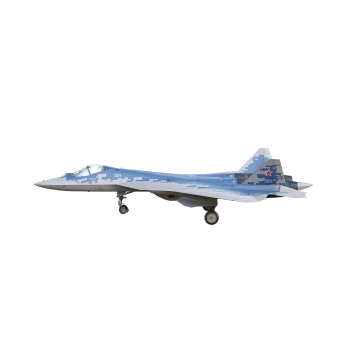
Russian Su-57 "Felon" multi-role fighter (blue)
It is a fifth-generation multi-role fighter developed by the Russian Sukhoi Design Bureau and is designed to compete with American F-22 and F-35. It is famous for its stealth characteristics, supersonic cruise capability and advanced avionics system. It adopts subsonic flying wing layout with stealth design, including special wave absorbing coating, flying wing layout shape design, rectangular engine nozzle shape, and maximum use of composite material technology. It has flexible take-off and landing capabilities and can take off from a variety of different types of airports. Its design and capabilities make it an important part of Russia's air power, representing the cutting edge of modern fighter technology.

American F/A-18FSuperHornet fighters
It is the main carrier-based multi-purpose fighter in active service of the U.S. Navy. It is developed on the basis of F/A-18C/DHornet and has a larger fuselage and wingspan to improve performance and load capacity. It can perform a variety of tasks including air superiority, day and night strikes with precision-guided weapons, combat escort, close air support, suppression of enemy air defense, maritime strikes, reconnaissance, forward air control, and aerial refueling. Known for its excellent performance, adaptability and advanced characteristics, it is an indispensable force in the US Navy's aircraft carrier battle group. It has 11 external points and can carry all types of weapons of the US Navy.

American F-35LightningII fighter
It is a single-seat single-engine multi-purpose fighter designed and produced by Lockheed Martin of the United States. It belongs to the fifth-generation stealth fighter. As the fifth-generation fighter introduced by the most countries in the world, F-35 has the characteristics of stealth capability, complex integrated electronic control system, versatility and versatility. Mainly used for close support, target bombing, air defense interception and other missions. Stealth design draws on a lot of F-22 technology and experience, avionics system is also a major highlight of the F-35. It is the result of multinational cooperation, its combat capability is only inferior to that of F-22A, and will be the main force of the air combat of the United States and its allies in the 21st century.

Russian Su-30 fighter
It is a two-seater, two-engine multi-purpose fighter developed by the Russian Sukhoi Design Bureau based on the Su-27 fighter. The NATO code name is "Flanker-C". It first flew on December 31, 1989 and was designed to meet the needs of modern air combat with outstanding air-to-air and air-to-ground combat capabilities. The design emphasized maneuverability and versatility, adopted a swept-wing layout, and was equipped with two AL-31F turbofan engines. Since its service, it has been procured by several countries and has become an important part of the modern air force. Its design and performance make it excellent and adaptable in a variety of combat tasks.

American F-16 FightingFalcon fighter
It is a single-engine multi-role fighter developed by General Dynamics (now Lockheed Martin) in the 1970 s to provide a lightweight, high-performance air superiority and ground attack platform. It is one of the representatives of the fourth-generation fighter, known for its high thrust-to-weight ratio, maneuverability, advanced avionics and relatively low maintenance costs. With a single vertical tail and bubble canopy, it provides the pilot with an excellent all-round view. Participated in numerous conflicts and wars, including the Gulf War, the Kosovo War and the Iraq War, proving its effectiveness on the modern battlefield.

European EurofighterTyphoon Fighter
It is a dual-engine, delta-wing, multi-purpose fighter developed by European multinational cooperation. It was originally designed as an air superiority fighter. The Future Eurofighter program, which began in 1983, is a multinational collaboration between Britain, Germany, France, Italy and Spain. Due to disagreements over design and operational requirements, France left the consortium and independently developed the Dassault Rafale fighter. The first flight took place on March 27, 1994, and was officially commissioned on August 4, 2003. The design and capabilities make it the cutting edge of modern fighter technology and represent the result of a collaboration between the European military aviation industry.

Russian MiG-35 multi-role fighter (gray)
It is a 4-generation multi-purpose fighter developed by the Russian MiG Aircraft Group. Based on MiG-29M/M2 and MiG-29K/KUB technologies, it has improved flight performance, advanced avionics equipment and diversified precision guided weapons. The aerodynamic layout adopts a design that relaxes the longitudinal static stability, and is equipped with a three-channel four-redundant digital line flight control system and a larger thrust engine to improve maneuverability. Increased internal and external fuel loads and aerial refueling capabilities significantly increase range. Reduced radar and infrared signatures, equipped with the latest self-defense kits and redundant aircraft systems, improve survivability

Russia MiG-29SE Fulcrum multi-role fighter
It is a multi-role fighter developed by the Russian MiKoyan Design Bureau and is an improved model of the MiG-29 series. It is designed to adapt to the changing battlefield environment, with enhanced avionics and weapon systems. Equipped with N01 radar and active jamming station, it is capable of carrying external underwing fuel tanks and up to six RW-AE active radar guided missiles, capable of attacking two targets simultaneously. The design emphasizes multi-role combat capabilities, including air-to-air and air-to-ground missions. The flight performance is excellent, with a maximum flight speed of Mach 2.35 and a service ceiling of 18,000 meters.

Russian MiG-35 fighter
NATO code name: "Fulcrum-F" is a four-and-a-half-generation multi-purpose fighter developed by Russia's Mikoyan Design Bureau on the basis of MiG -29M/M2 and MiG -29K/KUB technologies (according to the US-Russian fighter generation standard). It made its public debut in 2007 and entered service with the Russian Air Force in 2019. The design goal is to improve the handling performance, expand the use and enhance the combat effect. Its maximum take-off weight is 30% higher than that of the MiG -29M2, so it is classified as a medium-weight fighter. The model is being introduced to the international market.
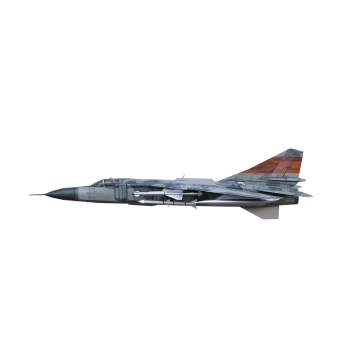
Soviet MiG-23 "Flogger" multi-role fighter (gray-blue fan color)
It is a multi-purpose fighter developed by the Soviet Union in the late 1960 s and designed by the Mikoyan-Gleevich Design Bureau. It debuted in 1970 and served in the air forces of the Soviet Union and its allies for the next few decades. The design goal is to find a balance between high speed and high maneuverability. It has a variable sweep wing design, which can adjust the wing sweep angle under different flight conditions to adapt to different mission requirements. As a multi-role fighter, the main uses include air superiority combat, ground attack and tactical reconnaissance, and can carry a variety of weapons.

Soviet MiG-23 "Flogger" multi-role fighter (dark green fan color)
It is a multi-purpose fighter developed by the Soviet Union in the late 1960 s and designed by the Mikoyan-Gleevich Design Bureau. It debuted in 1970 and served in the air forces of the Soviet Union and its allies for the next few decades. The design goal is to find a balance between high speed and high maneuverability. It has a variable sweep wing design, which can adjust the wing sweep angle under different flight conditions to adapt to different mission requirements. As a multi-role fighter, the main uses include air superiority combat, ground attack and tactical reconnaissance, and can carry a variety of weapons.

Soviet MiG-23 "Flogger" multi-role fighter (fan color)
It is a multi-purpose fighter developed by the Soviet Union in the late 1960 s and designed by the Mikoyan-Gleevich Design Bureau. It debuted in 1970 and served in the air forces of the Soviet Union and its allies for the next few decades. The design goal is to find a balance between high speed and high maneuverability. It has a variable sweep wing design, which can adjust the wing sweep angle under different flight conditions to adapt to different mission requirements. As a multi-role fighter, the main uses include air superiority combat, ground attack and tactical reconnaissance, and can carry a variety of weapons.

Russian Su-30MK multi-role fighter
Also known as the Flanker-H is a two-seater, two-launch multi-role fighter developed by the Russian Sukhoi Design Bureau and is part of the Su-27 fighter family. It is designed to meet a variety of combat missions, including air superiority, ground attack, electronic warfare and maritime strikes. Features include its advanced avionics, strong weapon payload capabilities, and superior maneuverability. Two AL-31F turbofan engines are equipped with thrust vectoring capability, which allows the Su-30 MK to perform complex maneuvers. Maximum speed up to Mach 1.9 with a service ceiling of 17,300 meters

Rafale fighter jet
The Rafale fighter, also known as the Dassault Rafale, is a French fourth and a half generation twin engine, delta wing, highly maneuverable, multi-purpose fighter aircraft. The true advantage of the Rafale fighter jet lies in its multi-purpose combat capability. This fighter jet is the most comprehensive in the world, not only capable of both sea and air operations, but also has strong capabilities in air combat, ground and sea attacks. Taking the F3 model as an example, the Rafale has advanced capabilities in sea attack, reconnaissance, and nuclear attack. The Rafale is a versatile fighter with comprehensive capabilities and balanced performance, capable of both aerial combat and ground attack.

Saab JAS39 "Eagle Lion" fighter jet
It is a lightweight single engine supersonic multi-purpose fighter manufactured by Saab in Sweden. Featuring a delta wing and duck shaped layout, adopting a relaxed stability design and a fly by wire flight control system. The later models are fully compatible with NATO. As of 2020, over 271 Eagle Lion aircraft of various models have been delivered, including A to F. The first flight was in 1988, and the first mass-produced aircraft was delivered in 1993. In 1996, it began serving in the Swedish Air Force. In 2003, upgraded models equipped with more advanced avionics and adapted to longer mission times began service. The main redesigned models of the Eagle Lion series.

Popular Models

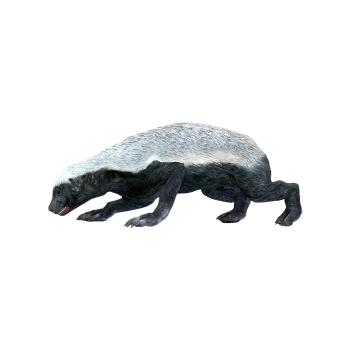
Honey Badger (3D animated model)
192 View
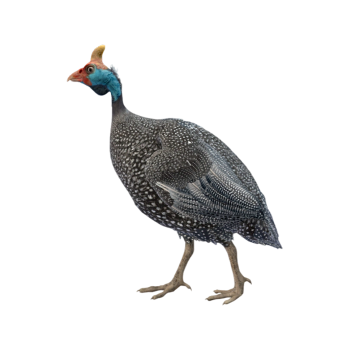
Guinea fowl (3D animated model)
163 View
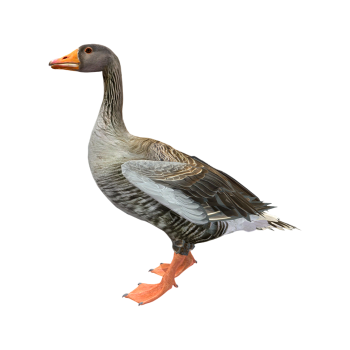
Wild Goose (3D animated model)
185 View
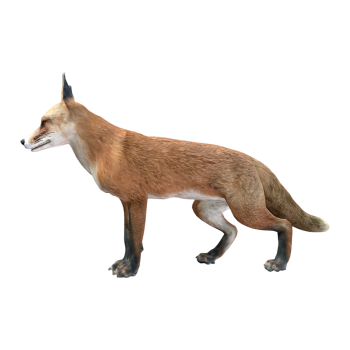
Red Fox (3D animated model)
153 View
Random Model
Adidas Superstar Blue Sneakers
672 View


Vintage vinyl record player
883 View

Asian Golden Cat Cub 3D Animation Model
1025 View


Log fence
826 View